


DefCrypt Blog
Practical analysis of exchange restrictions, AML, theft, and access recovery — without noise or blanket guarantees.

How to Choose a Crypto Recovery Company
How to choose a firm for exchange unfreezing or post-theft support and avoid a second scam: up-front miracles, seed-phrase requests, and promised success rates—without attacking named competitors.
Help Someone After Crypto Theft: First Steps for a Relative
A relative lost crypto to theft or a scam: what to say, what not to do together, how to avoid a second scam, and when to involve a specialist—without taking their seed phrase.

Fake Crypto Job Scam: First Steps After a Deposit
Fake crypto job scam: a remote "role" with a training wallet, deposits, and unpaid tasks—stop sending, what to preserve, and where not to pay an up-front recovery fee.
Deepfake and AI Crypto Scams: First Steps After a Transfer
Deepfake and AI crypto scams: how to recognize a familiar voice or video pushing a transfer, what evidence to keep, and why you should not "verify" on the same channel.
Crypto Stolen Through a Browser Extension: First-Hour Steps
Crypto stolen through a browser extension: how address swapping and injected scripts differ from seed phishing, and what to do in the first hour without using the same profile.

Airdrop and Quest Scams: Malicious Approval After a Lure
A fake airdrop or quest asks you to connect a wallet: how a malicious approval empties the balance, and what to do in the first hour after you sign.

Company Lost Crypto: What Businesses Should Do
A company lost crypto: how a treasury incident differs from private theft, the first 24 hours, communications, and freeze requests.

Fake Crypto Exchange Will Not Let You Withdraw: Fees and Extra Payments
A fake crypto exchange will not let you withdraw: how fee, tax, and withdrawal-deposit traps work, and how they differ from an AML hold at a real exchange.

Pig Butchering: A Long Con, Not a One-Off Scam
Pig-butchering crypto scams are long-term confidence schemes. Learn how the trap works, how to leave it, and what evidence to preserve after making transfers.

Freezing Stolen Crypto on an Exchange: Requests and Evidence
How to request that an exchange freeze stolen crypto, what evidence to attach, and what to expect—without guarantees about the outcome or response time.
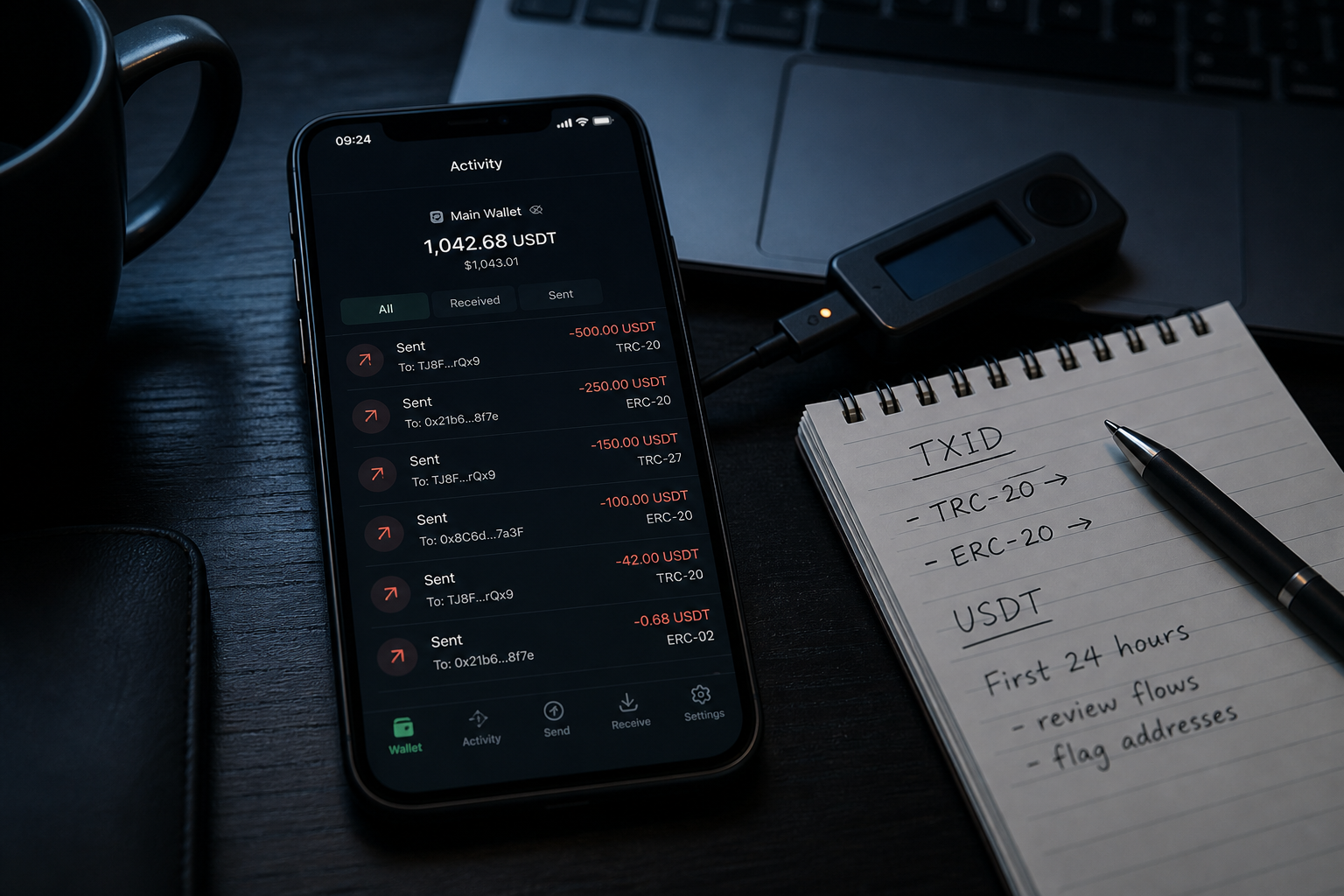
Stolen USDT: What to Do in the First 24 Hours
What to do if USDT is stolen: identify the TRC-20 or ERC-20 network, preserve the TxIDs, move remaining assets, and request a freeze at the destination exchange without assuming recovery is guaranteed.
Crypto Scam: Where to Report It and What Not to Do
What to do after a crypto scam: stop further payments, preserve evidence, avoid up-front payments to recovery services, and set realistic expectations.

Crypto Exchange Scam: A Fake Platform After the Transfer
A crypto exchange scam may use a fake platform introduced in a chat. Learn how to distinguish it from a real exchange and what to do after a transfer without paying a “withdrawal fee” or relying on promises of recovery.

Crypto Wallet Hacked: Where to Start
What to do after a crypto wallet compromise: distinguish a leaked seed phrase, phishing, or malware from a malicious approval and take the right first steps.
Crypto Stolen From a Wallet: A Calm Response Plan
What to do after cryptocurrency is stolen from a wallet: preserve TxIDs and addresses, move the remaining assets, prepare an exchange report, and avoid recovery scams.

Unauthorized Crypto Withdrawal from a Wallet: The First Hours
What to do in the first hours after an unauthorized crypto wallet withdrawal: preserve TxIDs, move the remainder to a clean address, and stop funding the compromised wallet.

Malicious Token Approval: The First 60 Minutes After Funds Move
A drainer using token approval: how to distinguish malicious approval from seed-phrase theft, revoke permissions, protect remaining assets, and preserve evidence.
Need an assessment of your situation?
Briefly describe what happened — without seed phrases or private keys. We will outline possible routes and assess their feasibility.
Request a free assessment