


EU sanctions and AML wallet relabeling: why an old transfer looks risky
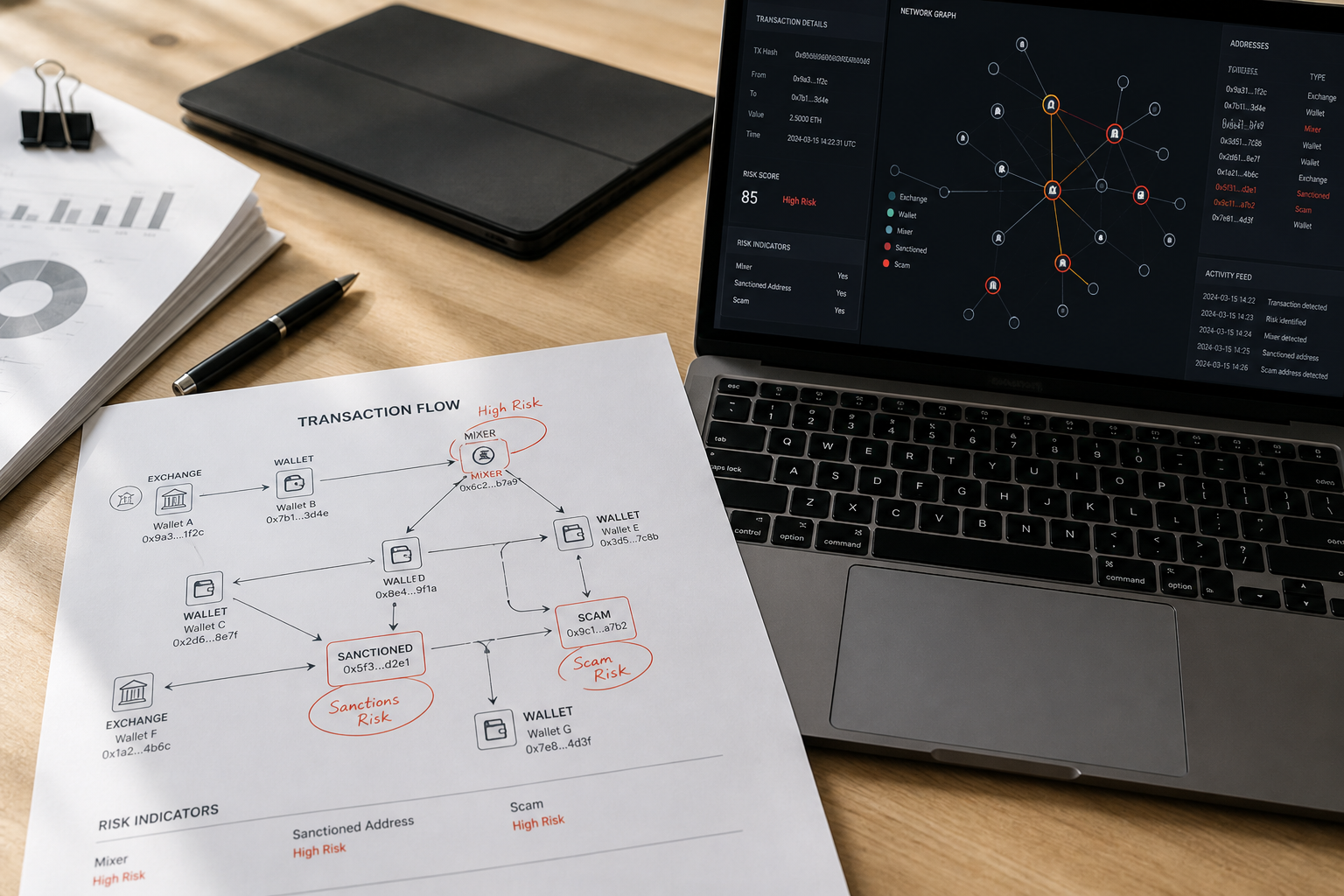
Successive EU sanctions in 2026 tightened measures around some crypto services; that is not a verdict on every wallet in the CIS. A separate AML layer sits on top: analytics vendors can relabel historical hops when a counterparty receives a new tag. A transfer that looked neutral yesterday can raise an alert today without any new action on your side. For risk sources in coin history, see what dirty crypto means. If withdrawals are already blocked, see exchange account unfreezing.
A sanctions package and an analytics label are different layers
The Council of the EU publishes successive packages of restrictive measures. In 2026, crypto-asset rules and named providers were among the areas tightened: listings, prohibitions on dealing with certain platforms, and related financial measures. That is a sanctions layer for operators under EU jurisdiction and for firms that align with those lists. It is not an automatic tag on "any address from the region".
An exchange usually sees a screening alert rather than the legal text: sanctions, a higher-risk service, or indirect exposure. New packages can raise risk on certain services and address clusters. A user who passed through such a service a year ago, or who received funds from someone who did, learns this in the account dashboard, not in the Official Journal.
Do not mix a jurisdictional ban ("the platform does not serve this client type or this service") with an AML hold on coin history. The first is in the terms and help center; the second is in a letter about exposure and documents. How risk sources in coins work is covered in what dirty crypto means.
How vendors relabel historical hops
Attribution does not freeze on the transfer date. When a service, cluster, or address receives a new sanctions or high-risk label, screening systems recalculate the graph. Public KYT descriptions include monitoring exposure to sanctioned entities both before and after restrictions are imposed. An indirect hop that was "grey" yesterday may cross the exchange's alert threshold today.
That is why "I screened this address a year ago and it was green" is a weak reply to today's ticket. Vendors, exchange thresholds, and report dates diverge. Look at the category (sanctions versus mixer versus scam), direct versus indirect exposure, share, and date — not only the color of someone else's checker. How to read an indicator without panic is in how to check a wallet for AML risk.
| Layer | What changes | What you may see in the account |
|---|---|---|
| Sanctions package | Lists and prohibitions for operators | A product or counterparty limit |
| AML relabeling | Hop labels after the fact | A SoF request or withdrawal hold |
| Your new action | Nothing — history is already on-chain | An alert without a "new violation" |
First steps if risk appears after the fact
- Save the email, status, case number, and TxIDs of the inflows the platform cites.
- Separate "restricted jurisdiction / product" wording from "risk / origin of funds / exposure".
- Map hops for the disputed amounts: counterparty, depth, date. Do not try to rewrite history with a mixer.
- Attach SoF for those amounts in one package through the official channel.
- Do not open a second account or change location through a VPN while the review is open.
A two-day plan for a restriction is in frozen crypto: what to do. If withdrawals are already on hold, see exchange account unfreezing and a success-fee assessment. A package can document good-faith receipt; it does not cancel a sanctions list and does not guarantee that a vendor label will be dropped.
What not to do after relabeling
- Do not hunt for a regulation article that is not in your letter, and do not argue with support using numbers from someone else's recap.
- Do not "clean" old hops through a mixer; to a reviewer that looks like concealing the trail.
- Do not attach someone else's statements as if the service had been different.
- Do not promise yourself a deadline: database updates and the compliance queue run on different clocks.
A direct match to a designated address and an indirect hop through several wallets need different packages, but both can appear after a label update. The goal is to close the request with facts about your chain, not to win a debate on EU sanctions policy in the support chat.
Risks and limitations
- Sanctions lists, EU packages, and analytics-vendor labels are updated; yesterday's report can go stale.
- A document package and a hop map do not guarantee that a restriction will be lifted and do not delete sanctions attribution.
- A public checker and an exchange's internal screening can disagree on the same historical hop.
- Trying to rewrite history with a mixer, a second account, or forged files usually increases risk.
- This article does not parse specific regulation article numbers and is not legal advice.