


Recovering Crypto in Belarus: Where to Report It
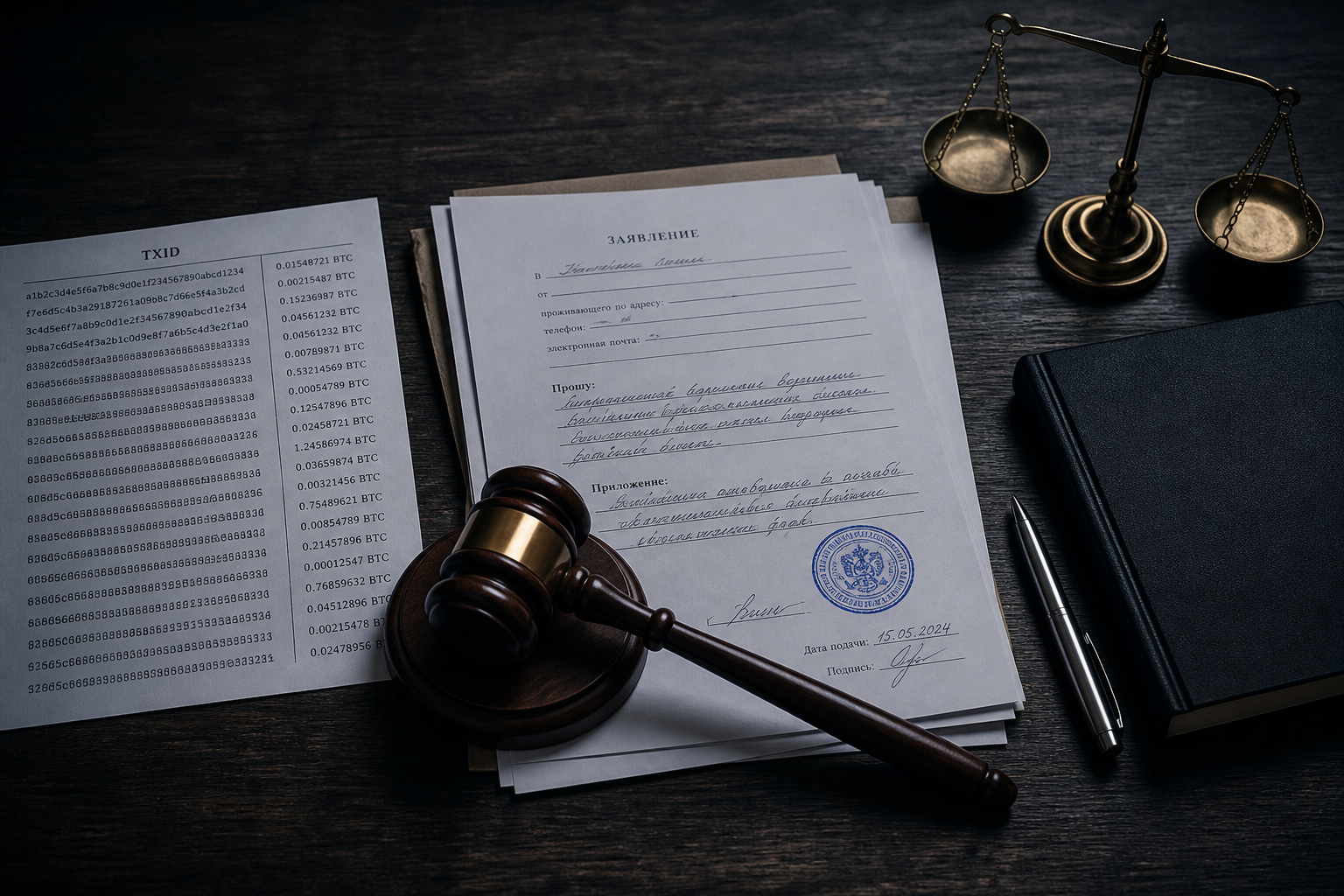
Recovering crypto in Belarus depends on the scenario: theft or fraud calls for a report to a local interior-affairs office and, where a person and a trail exist, a possible court route; a hold at a foreign exchange calls for a KYC / Source of Funds package, not a blockchain reversal. Presidential Decree No. 8 on tokens does not remove the limits of police and courts: a foreign platform may not enforce a local order. Preserve TxIDs and a timeline; see filing a police report and recovering crypto through court. Legal support can help assemble the package.
Theft, fraud, and an exchange hold are different problems
The question of recovering crypto in Belarus usually mixes three situations. First: you sent the asset to a scheme or sham “investment platform.” Second: wallet access was taken without a transfer you intended—phishing, a seed phrase, or malware. Third: an account at a major exchange is in a risk review while the balance is still visible. Mixing them is costly: the third needs documents in a ticket; the first two need a preserved trail and a report to an authority.
| Signal | More likely theft or fraud | More likely an exchange hold |
|---|---|---|
| Venue | Chat link, “mentor,” unverifiable domain | A known domain you typed yourself |
| What they ask | An extra “withdrawal” payment, a seed phrase, remote access | Passport, SoF, and an explanation in an official ticket |
| Trail | Outgoing TxIDs to third-party addresses | Withdrawal on hold in the account, with no external payment |
| Next step | Local police, evidence, analytics | A package for the platform, not a police report instead of a ticket |
This is not a legal opinion and not a promise of recovery. Classification under the Belarus Criminal Code (theft, fraud, and related offences) is for the authority, not a template in an article. If an unauthorized outflow from a self-custodial address is still running, close access first and file second. Anonymized examples are in case studies.
Checklist: where to report in Belarus
- Preserve TxIDs, networks, amounts, addresses, UTC times, and screenshots of the account or chat before you visit an office.
- File a written crime report at the local interior-affairs office (OVD) for your area: they accept a report, they do not staff a “crypto specialist at reception.”
- State the loss in Belarusian rubles at the rate on the date of the event and attach a written transaction list, not only a balance screenshot.
- Keep the registration slip or case number: platforms often ask for it in a formal request.
- Do not expect GUBOPiK of the Ministry of Internal Affairs to “pick up the case by itself”: specialist units join if the authority so decides, not because of a messenger post.
- Do not give a seed phrase to an “investigator from a chat,” and do not prepay anyone for “access to the MVD.”
GUBOPiK is the MVD directorate for organized crime and corruption, not a dedicated “crypto police” with a return button. For most victims the start is the local OVD. The matter may later move to a specialist unit or close without a criminal case—especially if there is no offence, no identifiable target, or the package is only “the money disappeared.” Preparing the timeline and exhibits falls within legal support; DefCrypt does not replace a lawyer in Belarus and does not promise that a case will be opened.
What to attach and what the authority can actually do
An authority needs connected facts, not a slogan. Useful material includes incoming and outgoing TxIDs, addresses, networks, amounts, and UTC times; the platform URL; correspondence with “support” and whoever introduced the scheme; contracts and fiat payments if any; and, if the trail reached an exchange, the platform name, deposit address, and ticket numbers. How to assemble a formal package without promising an outcome is covered in filing a police report for crypto theft: the logic is the same, the authority and details change.
A realistic result of filing is registration of the report and, where grounds exist, a review. That does not send coins back to your address. If the assets reached a KYC exchange, the authority may send a request; the platform looks at its own jurisdiction and lawful channel, not a photo of a receipt. If the chain branches, blockchain analytics can strengthen the map from source to destination—a report does not bind the police or a foreign exchange.
Courts, foreign exchanges, and the limits of the local route
A civil claim is relevant when there is a defendant, evidence of a transfer, and a place to enforce. An anonymous 0x… address with no identified person is a weak recovery target. Even a favorable judgment in Belarus rarely unlocks an exchange account in another country: platforms follow the law of their incorporation and licence. When a court route is even plausible is covered in recovering cryptocurrency through court.
- Do not confuse an AML hold at a real exchange with a fake platform disappearing: in the second case, an extra “withdrawal fee” increases the loss.
- Do not take a full seed phrase or keys to the station “for an expert review.”
- Do not pay a search-result middleman a “government unfreezing fee.”
- Do not expect Decree No. 8 by itself to protect a deposit at a foreign exchange.
Separately, tighter screening of some Belarus-based users on certain platforms is a risk-policy and document issue, not a duty of the MVD to unfreeze the account. If the account is live and the platform asks for SoF, that is a different route: exchange account unfreezing. If you need a lawyer for the package rather than a “recovery guarantor,” see when to involve a lawyer after crypto theft. The outcome depends on the facts, jurisdiction, and third parties.
Risks and limitations
- A police report, registration slip, or court order does not reverse the blockchain or guarantee that assets will return.
- A local authority may not open a case, and a foreign exchange may not act on a Belarusian request or judgment without its own legal basis.
- Confusing an AML hold at a real exchange with theft or a fake platform wastes time and pushes people into extra transfers.
- Sharing a seed phrase or keys, or prepaying for “access to the MVD,” is a common second-stage scam.
- This article maps the forks; it does not replace advice from a lawyer qualified in Belarus.
Sources used
- ETALON — Decree of the President of the Republic of Belarus No. 8 of 21 December 2017 on the development of the digital economy
- Ministry of Internal Affairs of Belarus — Main Directorate for Combating Organized Crime and Corruption (GUBOPiK)
- FBI IC3 — Cryptocurrency: what to report after theft or scam
- DefCrypt legal-support practice (authority report vs exchange hold, anonymized)