


Crypto Seizure and Arrest in Russia: Three Different Mechanisms
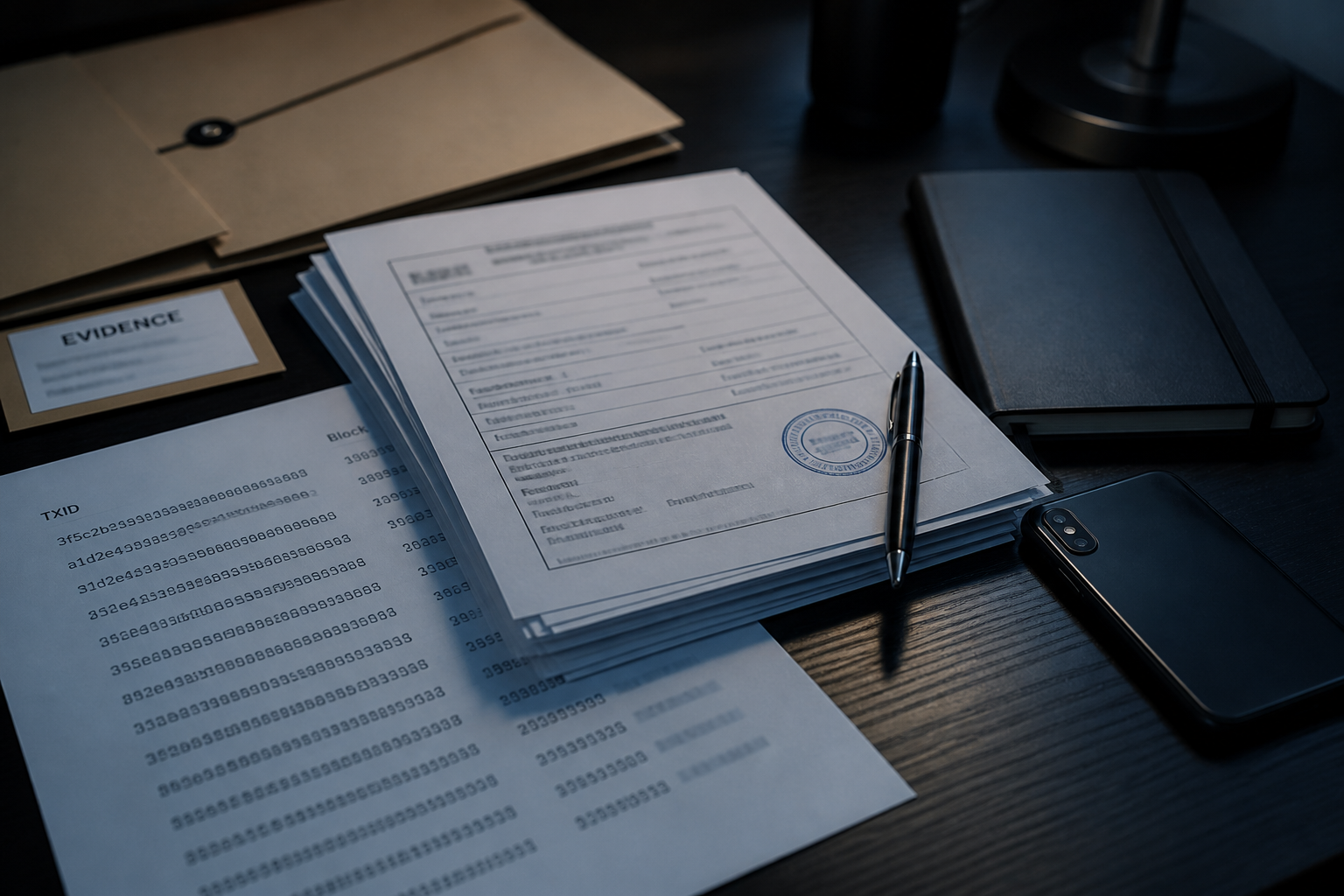
Crypto seizure and arrest in Russia is often confused with an exchange pause and with a stablecoin issuer freeze. Those are three mechanisms: a procedural restraint of property, a platform's internal risk review, and a blacklist in the token contract. The digital financial assets statute treats digital currency as property for its own purposes—that is not a button to return stolen coins and not a made-up "2026 article number." Package work sits under legal support; this article does not replace a lawyer.
Property on paper is not a return to your address
For the purposes of Russia's statute on digital financial assets and digital currency, digital currency is expressly treated as property. The practical implication is that tools already used for other property—restraint, seizure of a storage medium, enforcement—may apply if there is a case, a target, and a technical way to act. This is orientation, not advice: statutory text changes, and headlines about a "new 2026 procedure" often run ahead of the official wording. We deliberately do not invent a "2026 article number"; check the current consolidated text in primary sources.
Even when the asset is "property" in law, the blockchain does not reverse. A confirmed transfer stays on the ledger. Restraint is meaningful where someone can be compelled: a custodial exchange, a person who holds keys, or a stablecoin issuer. If the trail ends at a mixer or an unknown address whose keys the authority does not have, a paper act will not restore coins to your wallet. Court limits are covered in recovering crypto through court.
For a victim, property status strengthens the language of a report and of requests, but it does not replace TxIDs, a hop map, or registration of the complaint. How to assemble exhibits is in filing a police report for crypto theft. When to involve counsel on wording is in when to involve a lawyer after crypto theft.
Three mechanisms mixed up in one chat
| Mechanism | Who decides | What happens to the coins |
|---|---|---|
| Criminal restraint / seizure | Investigators, a court, enforcement of an order | A ban on dealing; sometimes seizure of a device or a transfer to a preservation address—if technically possible |
| Exchange AML pause | The platform under its KYC / AML rules | Funds sit on the exchange account; withdrawals paused pending review |
| Issuer blacklist | Tether / Circle and similar controls in the token contract | The balance is visible; transfer fails |
A criminal freeze is a process: an order, the scope of a ban on operations, preservation of the asset. It is not the same as an email to exchange support. An offshore platform looks to the law of its registration and to a lawful request from a relevant jurisdiction; a Russian act does not by itself press a button on an account in another country. Enforcement is a separate question, not a slogan.
An AML pause is the custodian's service control: deposit risk, source of funds, vendor sanctions lists. It is lifted with documents and an answer to the request—not with a certificate that "crypto is property." An issuer blacklist is a restriction in the stablecoin contract: an exchange ticket will not remove it. Mixing the three layers means sending useless requests to the wrong door. Anonymized examples without promised outcomes are in case studies.
What this gives a victim—and what it does not
It gives language and leverage where the trail is still live: describe the stolen asset as property, ask for preservation measures against a known recipient, and attach a TxID map to a police report and to a platform request. Sometimes an authority or court will treat a digital asset like other property—if the address is identified and someone can be compelled. That is stronger than "I was scammed, please return it" in a support chat.
It does not give automatic recovery, deadlines, or a duty on a foreign exchange to obey every Russian act. It does not turn a mixer or an unknown wallet into an enforceable target. It does not replace hour-zero protection of remaining assets: while you read about seizure, a compromised address can still be emptied. Legal support can prepare a timeline and exhibits; representation before an authority or court is arranged separately with a qualified lawyer where you are.
For a holder on the other side, the same toolkit works both ways: a mistaken link between an address and an investigation, a request to an exchange, a pause until origin is shown. Then the written basis for the restriction and a source-of-funds history matter more than advice to "move it to another account." Outcomes depend on facts and third parties—there are no guarantees.
First steps if assets may be frozen or already are
- Record which layer triggered: the exchange account UI, a failed stablecoin transfer in an explorer, or an authority / court document.
- Preserve TxIDs, addresses, network, UTC time, emails, and status screenshots in one package—never a seed phrase.
- Do not open a second account or "clean" history through a mixer: for AML that is a new risk signal.
- If this is theft—stop the outflow and capture the trail, then file with exhibits, not the other way around.
- Ask in writing for the basis: internal platform review, a law-enforcement request, or an issuer restriction.
- Discuss request wording and whether court is realistic with a lawyer on the facts, not on a news headline.
If the layer is exchange AML, answer the specific request rather than supplying a "property certificate." If the layer is the issuer, use Tether's or Circle's official channel and a legal process—not "unfreeze in 24 hours" on Telegram. If the layer is a criminal freeze, do not ignore deadlines or hand keys to an intermediary "to lift the arrest."
This article maps forks; it does not apply a statute to your case. Read the current official text of the relevant laws; practice is uneven. Timeline and exhibit preparation sits under legal support. DefCrypt does not promise that a freeze will be lifted, an account unfrozen, or assets returned.
Risks and limitations
- Treating digital currency as property does not reverse the blockchain or guarantee recovery for a victim.
- A criminal freeze, an exchange AML pause, and an issuer blacklist are different mechanisms; mixing them produces useless filings.
- An act from one country may not be enforced by an exchange or court in another without a separate procedure.
- Headlines about a "new 2026 procedure" often outrun official text; check the current wording rather than an invented article number.
- This article is general orientation, not legal advice for your jurisdiction, and not a promise of outcome.
Sources used
- ConsultantPlus — compilation "Cryptocurrency as property" (digital currency treated as property)
- ConsultantPlus — Federal Law No. 259-FZ of 31 July 2020 (digital financial assets and digital currency)
- Tether — Terms of Service (freeze / blacklist / law enforcement)
- DefCrypt legal-support practice (criminal freeze vs AML vs issuer blacklist, anonymized)